Several years ago, I wrote a column for MMANews.com titled “The Hidden Asterisks Behind Jon Jones’ Drug Test History.” At some point after departing the site, the piece became inaccessible. That is unfortunate because it was one of my proudest pieces of work, not for how it was written but for what it accomplished: It provided accurate context surrounding the biggest question mark on arguably the greatest career in MMA history…context that was essentially absent from mainstream MMA coverage at the time and has remained largely absent ever since.
As a writer, I have always been drawn to what is not being said but needs to be. Some of the most compelling and necessary pieces are the ones that become unique simply by virtue of the fact that nobody else is bothering to write them. Jon Jones and his drug test history have always been a clear example of this, and it continues to fascinate me how persistently the context surrounding these cases is ignored. Among Jones haters, this is expected since many were looking for ways to discredit him long before any doping finding ever entered the conversation. But what is more remarkable is that professional journalists, people whose job it is to inform their audiences accurately, routinely fail to provide the context these cases demand.
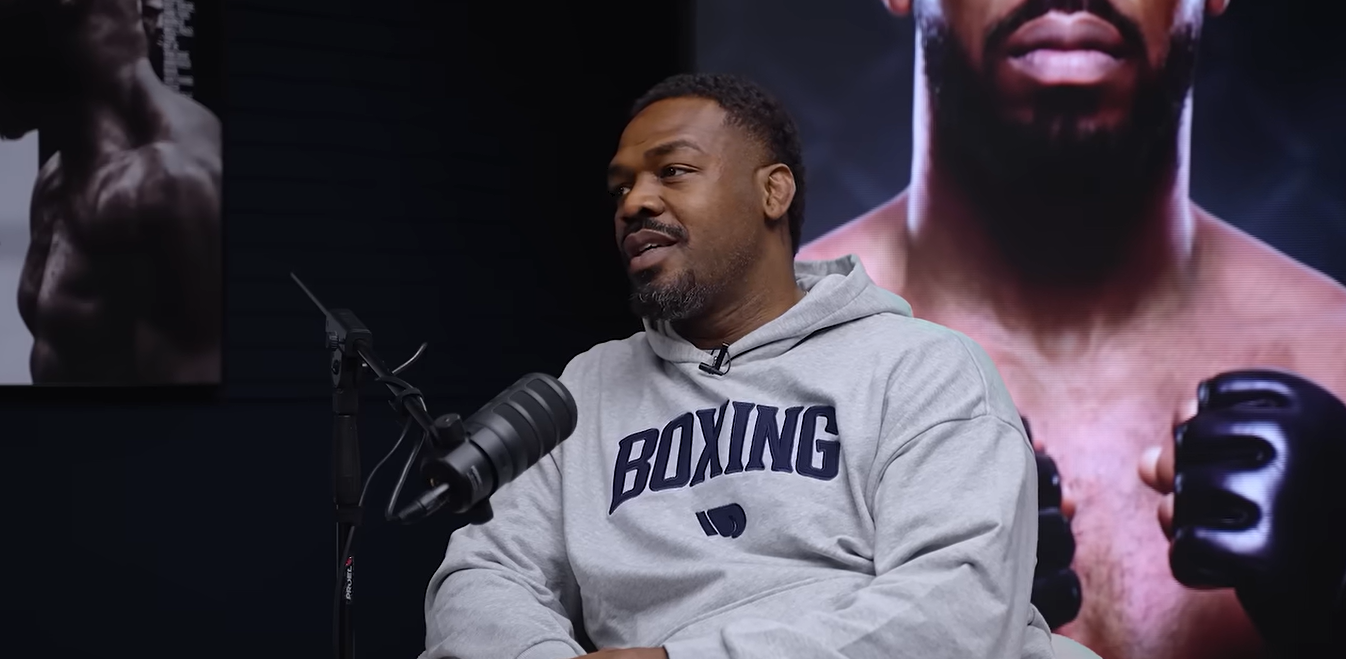
Our latest example arrived when Jones sat down with ALF Global for a wide-ranging interview and, once again, addressed the steroid issue directly:
“I guess people would say, ‘Well, Jon took steroids.’ Never took steroids. Never took steroids. There was a supplement found in my body. It was proven to come from a supplement company I was using. It was a tainted supplement that I was using. The amount of this substance that was in my body was so small that it took very expensive scientists to be able to even find it.
“And the supplement that was found in my body has zero performance-enhancing effects. Zero. And that’s very well-documented. And for some reason, the fans, they ignore all that. And they’re just like, ‘Something about steroids. He’s guilty!’
“I never did, and that was proven. It’s funny because fighters like to be like, ‘Jon Jones is a knucklehead.’ But then, they’re like, ‘But he’s brilliant enough to do steroids and trick the UFC scientists.’ It’s like, which one is it? Am I the knucklehead or am I the mad genius who somehow got away with doing steroids?”
The aggregation of this quote presented the MMA media with a clear opportunity: to educate fans on exactly what Jones is referencing, trace the documented record of each flagged test, and assess whether his statements hold up to scrutiny. Instead, the context was predictably omitted. Coverage was largely framed as Jones’ word against the tests. In at least one case, the framing was subtly condescending, fixating on his choice of the phrase “expensive scientists,” rather than the substance of his argument.
There was one meaningful exception. MMA Junkie’s Farah Hannoun stood apart from the pack. Without editorializing, without angling for or against Jones, her piece noted that independent arbitration had determined Jones did not knowingly cheat in two separate cases and accurately summarized the WADA-accredited laboratory’s conclusion that the trace-level findings around UFC 232 were a residual effect rather than evidence of new ingestion. For a straight news article rather than a column, it was notably thorough. It is also, frankly, a rarity. This topic is a gold mine for an extensive, well-researched column. The documented record is detailed, the facts are verifiable, the parallel cases are numerous, and no one else in the MMA media has ever put it all together in one place. That is what made my original piece not just unique but necessary and what makes this one equally so.
Perhaps only Jon Jones himself really knows if he has intentionally taken performance-enhancing drugs during his MMA career. As his complicated test history has proven, science may not lie, but it also does not necessarily tell the whole truth. It is no secret that Jones has failed multiple drug tests, but the official statements that clear him of intentionally cheating have all but faded to black, with my original article being another rare piece of light on the topic that was shut off.
At this point, it may even come as a surprise to many newer fans that every case that reached adjudication ended in a formal determination that Jones did not intentionally cheat and that the one case that never got there was a recreational drug that should not have been tested for in the first place.
This piece will aim to re-expose these asterisks that are seemingly buried deeper and deeper as time passes, not as an argument for Jon Jones’ innocence but as a resource for ethical journalism and a reference for objective and/or newer fans who are fascinated by the subject. The word “innocent” indeed may be a stretch, as even the biggest defender of Jon Jones would tell you that he has behaved carelessly at times and thus deserved punishment. They also would concede that banned substances have been found in Jones’ system, further tainting his “innocence.” But it seems the spirit of Jones’ argument is, “I was found not to be a cheater,” which is a fact…a fact that may be inconvenient for many to revisit or accept, but one supported by unambiguous documentation.
UFC 182
DRUG TEST ISSUES: A cocaine metabolite was found in an out-of-competition sample collected roughly a month before Jon Jones’ light heavyweight title defense against Daniel Cormier in January 2015. He also had very low testosterone levels, which is an indication of possible PED use.
THE ASTERISKS:
- The Nevada State Athletic Commission (NSAC) used the World Anti-Doping Agency (WADA) code for its testing procedure for the event. According to the 2014 WADA Prohibited List, there should not have been any out-of-competition testing done for recreational drugs. Simply put, this test finding is irrelevant, which is why Jones was not sanctioned for the presence of a cocaine metabolite in his system.
- After testing was done to determine if Jon Jones’ testosterone level stemmed from an exogenous (non-natural) source, the Sports Medicine Research & Testing Laboratory (SMRTL) issued the following statement:
“Based on the review of steroid profiles and available IRMS data, there is no evidence to indicate the administration of exogenous testosterone or testosterone precursors.”
Though the testosterone levels raised reasonable suspicions and the cocaine positive may continue being a source of memes and jokes indefinitely, this all would take a backseat to the much larger testing issues to come.
UFC 200

DRUG TEST ISSUES: Days before the 2016 event, Jon Jones was removed from the main event against Daniel Cormier after testing positive for two banned substances: clomiphene and letrozole.
THE ASTERISKS: A “dick pill” that Jon Jones consumed was proven to be the contaminated supplement that contained both banned substances. Jones’ poor decision-making in allowing the banned substances into his system resulted in the suspension, but the official statement provided by the independent arbitration panel presiding over the case said in no uncertain terms:
“On the evidence before the panel, the applicant is not a drug cheat. He did not know that the tablet he took contained prohibited substances or that those substances had the capacity to enhance sporting performance.”
Following the outcome and arbitration statement, Jones issued a statement of his own:
“Although I was hopeful for a better outcome in the USADA ruling today, I am very respectful of the process in which they allowed me to defend myself. I have always maintained my innocence, and I am very happy I have been cleared of any wrongdoing pursuant to the allegations made that I had intentionally taken a banned substance.
“I am pleased that, in USADA’s investigation, they determined I was ‘not a cheater of the sport.’ Being cleared of these allegations was very important to me. I have worked hard in and outside of the Octagon to regain my image and my fighting career and will take these next eight months to continue my training and personal growth both as a man and an athlete.”
Jon Jones often cites USADA when addressing his proven “innocence,” but the binding findings came from independent arbitration panels, which are used to preside over contested cases, and not from USADA itself. It would be more effective and accurate for Jones to use phrases like “proven innocent in the final decision” or “by independent arbitration” to prevent his point from being lost in translation and the exchange veering off into semantics instead of whether his name was vindicated.
This outcome was very similar to that of the next test failure, which appeared to possibly be the case that would break Jonny Bones.
UFC 214

DRUG TEST ISSUES: Following his KO victory over Daniel Cormier in 2017, it was revealed that Jones had tested positive for trace amounts of Dehydrochlormethyltestosterone, aka Oral Turinabol (an anabolic steroid). The result of the fight was then overturned to a no contest.
THE ASTERISKS: Primarily (but not exclusively) due to the “extremely low” amount of Turinabol found in Jon Jones’ system and because it could not possibly have any performance-enhancing benefits, Jones was found to not have cheated intentionally. He was suspended anyway largely because he was never able to prove how the banned substance (trace or otherwise) entered his system. The suspension was later reduced because Jones agreed to provide “substantial assistance” to USADA, but the reduced suspension has nothing to do with why Jones claims he was proven innocent here.
Chief arbitrator Richard McLaren issued the following statement after an extensive investigation:
“I find that all of the evidence available to me leads me to conclude that the violation was not intended nor could it have enhanced the Athlete’s performance.” (Official document, Section 7.17, pg. 20.)
This led Jones to issue this statement: “It’s difficult to express myself at this moment, but I can definitely say my heart is filled with gratitude and appreciation. I want to thank all of you who have stood by me during the toughest stretch of my life. It has meant the world to me and always will.”
Jones felt a sense of victory and closure after the independent arbitration panel’s findings, but this was not the end of the Turinabol chapter.
UFC 232
DRUG TEST ISSUES: An extremely low amount of Turinabol was found in Jon Jones’ system again leading up to his fight against Alexander Gustafsson in 2018.
THE ASTERISKS: Aside from the same fact that scientists once again agreed that no performance-enhancing benefit could come from the amount of Turinabol found in his system, there was also no proof of re-administration. In other words, Jones tested positive for the same Turinabol traces he popped for in 2017 (UFC 214) due to the pulsing of the M3 metabolite. Vice President of Athlete Health and Performance for the UFC Jeff Novitzky fielded questions on this complex issue, including addressing topics on the precedent for this M3 metabolite situation, microdosing, USADA objectivity, and the credibility of sources external to USADA.
One of those sources was Dr. Daniel Eichner, president of SMRTL. When Jones regained his Nevada State Athletic Commission fighter’s license after his latest drug test issue, the commission cited Daniel Eichner in their official statement:
“Dr. Daniel Eichner, President and Laboratory Director of SMRTL, reviewed the above investigative reports and determined that they show no evidence that dehydrocholormethyltestosterone (DHCMT) has been re-administered. Dr. Eichner further provided that there is no scientific or medical evidence that the athlete (Jones) would have an unfair advantage leading up to, or for, his contest scheduled on March 2, 2019.”
The Rule That Changed After Jones Was Punished
There is one development that occurred after Jones served his suspension, and it is possibly the most underreported fact in this entire saga.
In 2019, the UFC and USADA revised the anti-doping policy to establish a threshold for the M3 metabolite of DHCMT. Results under 100 picograms per milliliter would no longer be treated as violations but as atypical findings, provided there was no evidence of new ingestion or performance benefit. The reasoning was that the long-term metabolite does not indicate active steroid in an athlete’s system, and there is no reliable way to determine when the parent substance was ingested, potentially years earlier. Every reading Jones produced during this period falls under that line, including the 33 picograms per milliliter that became a punchline.
An entire pay-per-view was relocated across state lines, a championship was stripped, a knockout was wiped from the record books, and a man lost 15 months of his prime over readings that the sport’s own anti-doping program would soon decide were not meaningful enough to charge anyone over. The governing body looked at the science, changed its own rules, and effectively conceded the argument Jones had been making the entire time. That should have been a headline. It was barely a footnote.
After this latest resolution, Jon Jones has repeatedly claimed that he’s been proven innocent and has accused his detractors of conveniently remembering the accusations but not the vindication. When Jones makes these claims, he is not specific about what “proof” he is referring to, so many fans may believe he is delusional or just habitually lying. But the independent panels that presided over his cases felt that the evidence presented on Jones’ behalf met the burden of proof for non-intent, and this well-documented fact is what Jones is referring to. In every one of Jon Jones’ cases that was actually adjudicated, an authority prepared an official statement declaring that Jon Jones is not a cheater.
The Cases That Get the Benefit of the Doubt
What makes all of this more glaring is that Jones’ cases are not anomalies. Contaminated supplements, residual metabolites, revised thresholds, and arbitration findings of non-intent are routine across combat sports. They are simply not extended to Jones with the same understanding granted to everybody else.
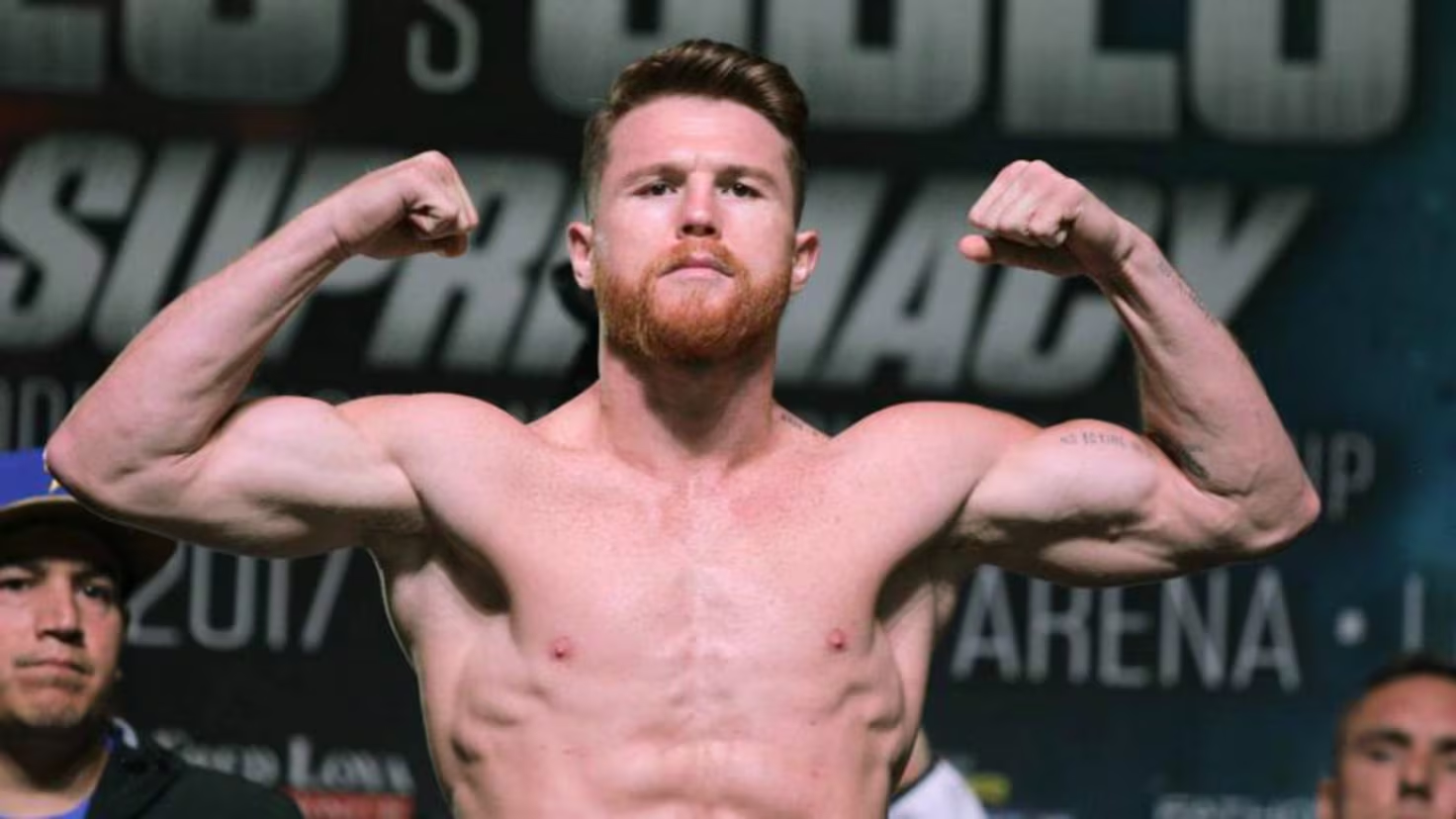
Consider Canelo Álvarez, arguably the biggest name in boxing and a pay-per-view draw who dwarfs nearly anyone in combat sports history. In 2018, he tested positive for trace amounts of clenbuterol in two out-of-competition samples collected in Mexico. His camp attributed it to contaminated meat, a well-documented problem in Mexico’s food supply. The letter cited in his defense, stating that the values were all within the range expected from meat contamination, was written by Dr. Daniel Eichner of SMRTL, the same laboratory director and the same WADA-accredited facility whose findings cleared Jon Jones. Nevada issued a one-year suspension, cut it in half for cooperation, and Álvarez was back that September. His legacy has not been meaningfully tainted. His name does not come with an asterisk. Jones’ does.
Then there is Sean O’Malley, one of the most heavily promoted figures in the sport and a former bantamweight champion. O’Malley did not have one Ostarine case. He had two. The first came from out-of-competition tests in September and December 2018 and produced a six-month sanction announced in April 2019, alongside three other UFC fighters sanctioned the same day for the same substance, all resolved as supplement contamination. The second came from tests in August 2019 and produced another six-month sanction announced in January 2020, again resolved as contamination with no evidence of intentional use. That is two anti-doping policy violations. He came back, won a title, and the whole thing functions as if it never happened. When was the last time you read a conversation about Sean O’Malley that included an asterisk?
Jones was not even alone on the specific science. Muslim Salikhov tested positive multiple times for the same long-term metabolite, was tested six more times during adjudication, produced two positives and three negatives, never once showed the parent drug, and had his charges dismissed outright. USADA’s stated reasoning was that the pattern of positives and negatives, combined with the known extended excretion time, made recent ingestion highly unlikely and left no performance benefit. Grant Dawson also landed in a similar spot.
What Every Journalist Owes This Story
It is the duty of every journalist in this field to reference these official statements when writing on any topic directly related to Jon Jones’ test history. It does not need to be a thorough revisitation of each case; it could be put just as succinctly as Jeff Novitzky put it:
“You look at both of Jon’s (suspension) cases…Richard McLaren, maybe the most credible anti-doping guy in the world and/or his group in both written decisions, in both instances, they determined this was non-intentional.”
Even more succinctly stated: Each of Jon Jones’ test failures that led to a suspension was found to be unintentional through independent arbitration. To simply list the drug test failures is not presenting both sides of the story nor the whole truth.
When the only statement on the other side of referencing these cases is “Jon Jones has always proclaimed his innocence” without mentioning the authorities who said the very same thing, there lies a crucial omission that misrepresents the case and Jones’ claims of innocence.
There Is No Such Thing as Guilty by Math
For fans and media members alike, you are not necessarily a “hater” or biased if you believe that where there’s smoke, there’s fire. And for fans specifically, I can understand the urge to simplify things and not revisit each case but instead proceed with the snapshot information consumption that dominates today’s digital literacy.
But the objective truth of the matter is that there is no such thing as being “guilty by math.” In other words, each official statement saying that Jon Jones is not a cheater does not become void because there were multiple doping cases attached to his name.
In the context of the law, a man cannot be found guilty by a jury of his peers just because he was tried multiple times for the same crime. In many cases, this wouldn’t even be permitted as evidence up for discussion during the deliberation. But regardless of where you believe Jon Jones sits on the innocence/guilty spectrum, it should be no mystery to anyone how or why he continues to proclaim his innocence.
At the end of the day, if you were in Jon Jones’ position where every time you were sanctioned, the presiding authority ultimately declared that you did not cheat, then you, too, would become quite accustomed to uttering the phrase, “I was proven innocent,” especially when so many seem determined to pretend that no such proof exists.
It is unfortunate that my original column disappeared, but its absence created the reason to write this one. This is what I look forward to doing on this platform: sharing stories that deserve to be told, including the ones hiding in plain sight that others, for whatever reason, keep walking past. Sometimes the most necessary piece you can write is the one that simply states the unsaid.